The Milky Way is an enormous collection of stars, planets, gas and dust. It is home to our Solar System and many other fascinating objects in space. One of the most intriguing questions for astronomers and stargazing enthusiasts is: how many stars are there in the Milky Way? The answer, while fascinating, is not as simple as it may seem.
In this article, we will explore the latest scientific estimates. We will also explain the difficulties involved in counting stars and why Las Cañadas del Teide, in Tenerife, is an extraordinary place to admire this impressive celestial spectacle.
Understanding the Milky Way
The Milky Way is a barred spiral galaxy, one of the most common types of galaxies in the universe. It has an approximate diameter of between 100,000 and 120,000 light-years, and its mass is mainly made up of stars, dark matter and interstellar dust. The galaxy gets its name from its whitish appearance in the night sky, produced by the enormous concentration of stars that, when viewed from Earth, form a diffuse band of light. This phenomenon has inspired myths and legends in numerous cultures for centuries.
At its centre lies the galactic core, a dense and enigmatic region that contains a supermassive black hole known as Sagittarius A. This black hole, whose mass is millions of times greater than that of the Sun, exerts an enormous gravitational pull on the stars around it, causing them to orbit at extraordinary speeds.*
Surrounding the core is the central bulge, an area densely populated by older, redder stars, together with clouds of interstellar gas and dust. This bulge has an elongated bar-shaped structure, which is why the Milky Way is classified as a barred spiral galaxy.
Extending outwards from the central bulge are the spiral arms, which are mainly home to the galaxy’s younger, hotter and brighter stars. These arms — such as the Perseus Arm, Sagittarius Arm and Orion Arm — are not static structures, but dynamic regions where new stars are born from interstellar clouds of gas and dust.
The Orion Arm, also known as the Orion Spur, is a minor arm where our Solar System is located. Situated around 26,000 light-years from the galactic centre, the Solar System occupies a relatively quiet and stable region.
At the outer limits of the Milky Way lies an enormous diffuse halo made up of ancient stars and globular clusters, as well as dark matter, which plays a fundamental role in the galaxy’s gravitational structure. The halo extends far beyond the visible disk and includes satellite galaxies such as the Magellanic Clouds, along with streams of stars pulled by the Milky Way’s gravity over billions of years.
The Milky Way is also far from static: it is constantly in motion. It rotates at an approximate speed of 828,000 km/h and takes around 240 million years to complete one rotation. It is also part of the Local Group, a collection of more than 50 galaxies dominated mainly by the Milky Way and its neighbour, the Andromeda Galaxy.
From its luminous core to its spiral arms filled with celestial wonders, the Milky Way is like a small universe within the universe itself. As the home of our Solar System and countless stars and planets, it remains one of the great objects of exploration, discovery and scientific curiosity.
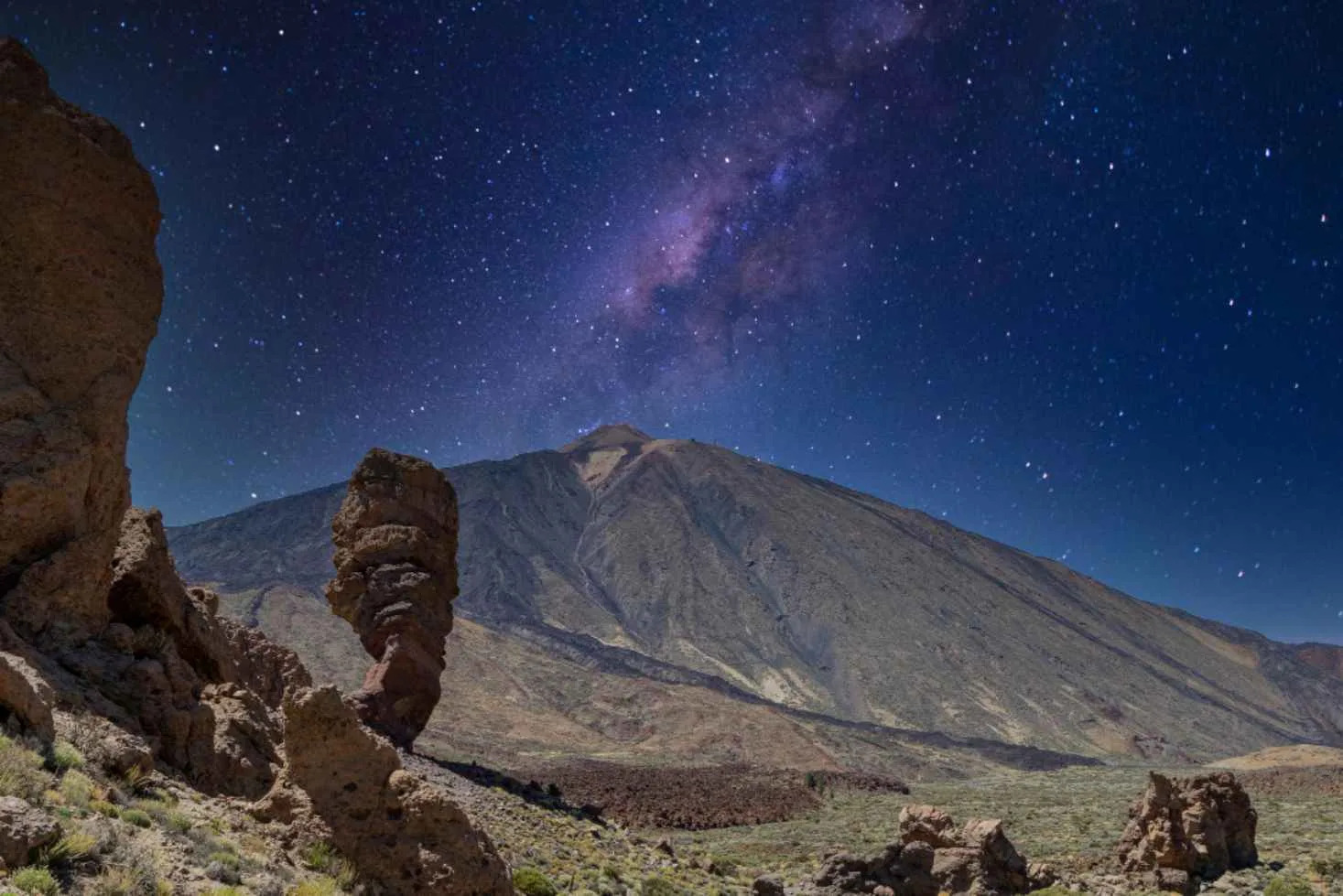
How Many Stars Are in the Milky Way?
Current estimates suggest that the Milky Way contains between 100 billion and 400 billion stars. This wide range exists because counting stars in such an enormous galaxy is an extraordinary challenge. Many remain hidden behind interstellar dust, while others are too faint to be detected with current technology.
Key Factors in Estimating the Number of Stars
- Distribution of stars: Stars are not evenly distributed throughout the Milky Way. The dense central bulge contains older and less luminous stars, while the spiral arms mainly contain younger and brighter stars.
- Influence of dark matter: The mass of the Milky Way includes both visible stars and dark matter, making direct measurements more complex.
- Technological limitations: Even the most advanced telescopes and observatories, such as the Hubble Space Telescope and the Gaia observatory, can only study certain regions or samples of the galaxy.
Number of Stars in Our Solar System
Unlike the Milky Way, the Solar System contains only one star: the Sun. While the galaxy is home to billions of stars, our single star is essential for life on Earth and lies at the centre of our planetary system.
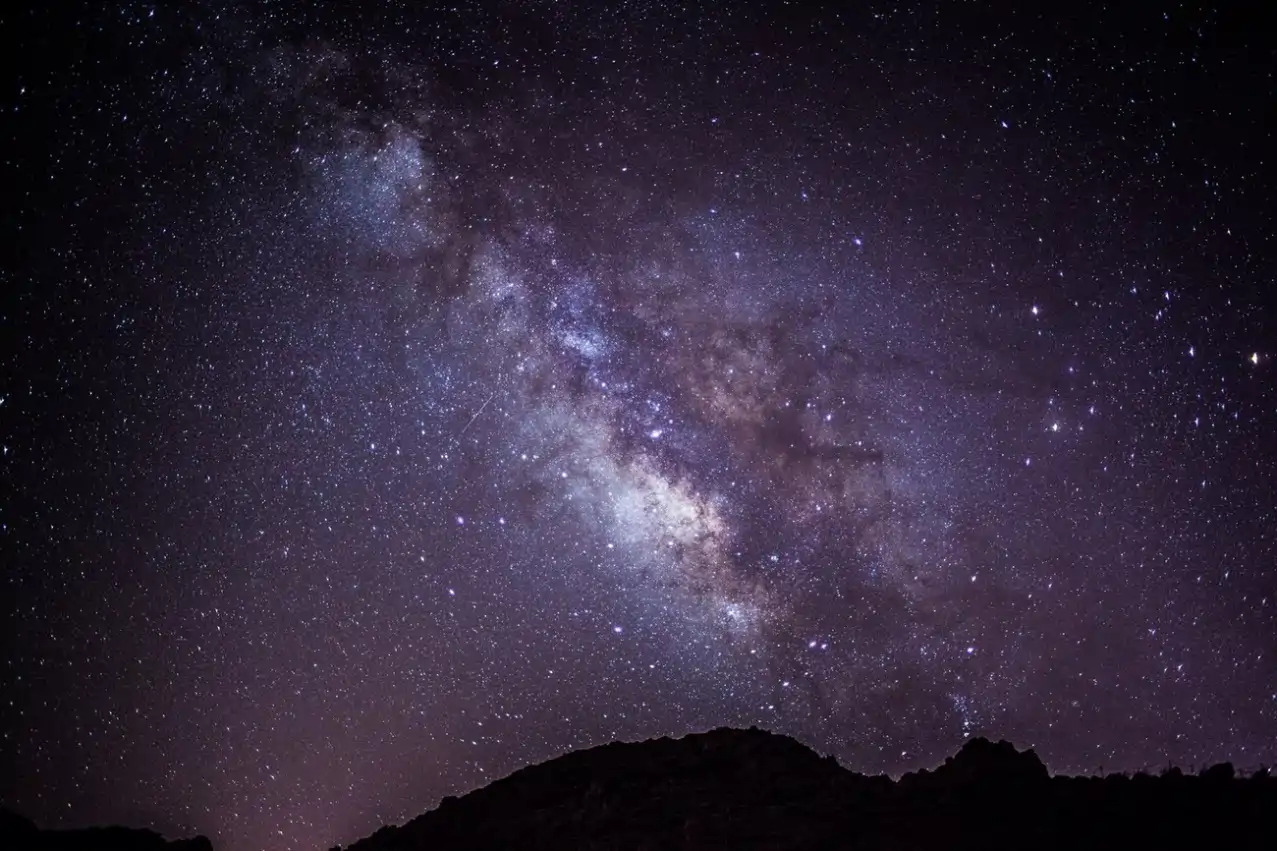
The Difficulties of Counting Stars
Counting the stars in the Milky Way is comparable to trying to estimate the number of grains of sand on a beach. Here are some of the reasons why:
- Obscuration caused by dust: Clouds of interstellar dust block our view of many stars, particularly in the central regions of the galaxy.
- Differences in brightness: Some stars, such as red dwarfs, are very faint and difficult to detect, while others, such as giant stars, shine extremely brightly.
- Dynamic nature: Stars are born, evolve and die, meaning that the galaxy is constantly changing.
Stargazing in Las Cañadas del Teide
Although counting stars is a task for scientists, observing them is an experience available to everyone. Las Cañadas del Teide, located in Teide National Park in Tenerife, offers exceptional conditions for observing the night sky. Its high altitude, low levels of light pollution and clear skies make it an ideal location for viewing the Milky Way.
Why Teide Is Perfect for Stargazing in Tenerife
- High altitude: At more than 2,000 metres above sea level, the upper areas of Teide are above a significant part of the lower atmospheric layers, providing clearer views of the sky.
- Protection of the night sky: The Canary Islands have measures in place to protect the quality of their skies from light pollution.
- Excellent conditions: Tenerife enjoys many clear nights throughout the year, providing frequent opportunities for astronomical observation.
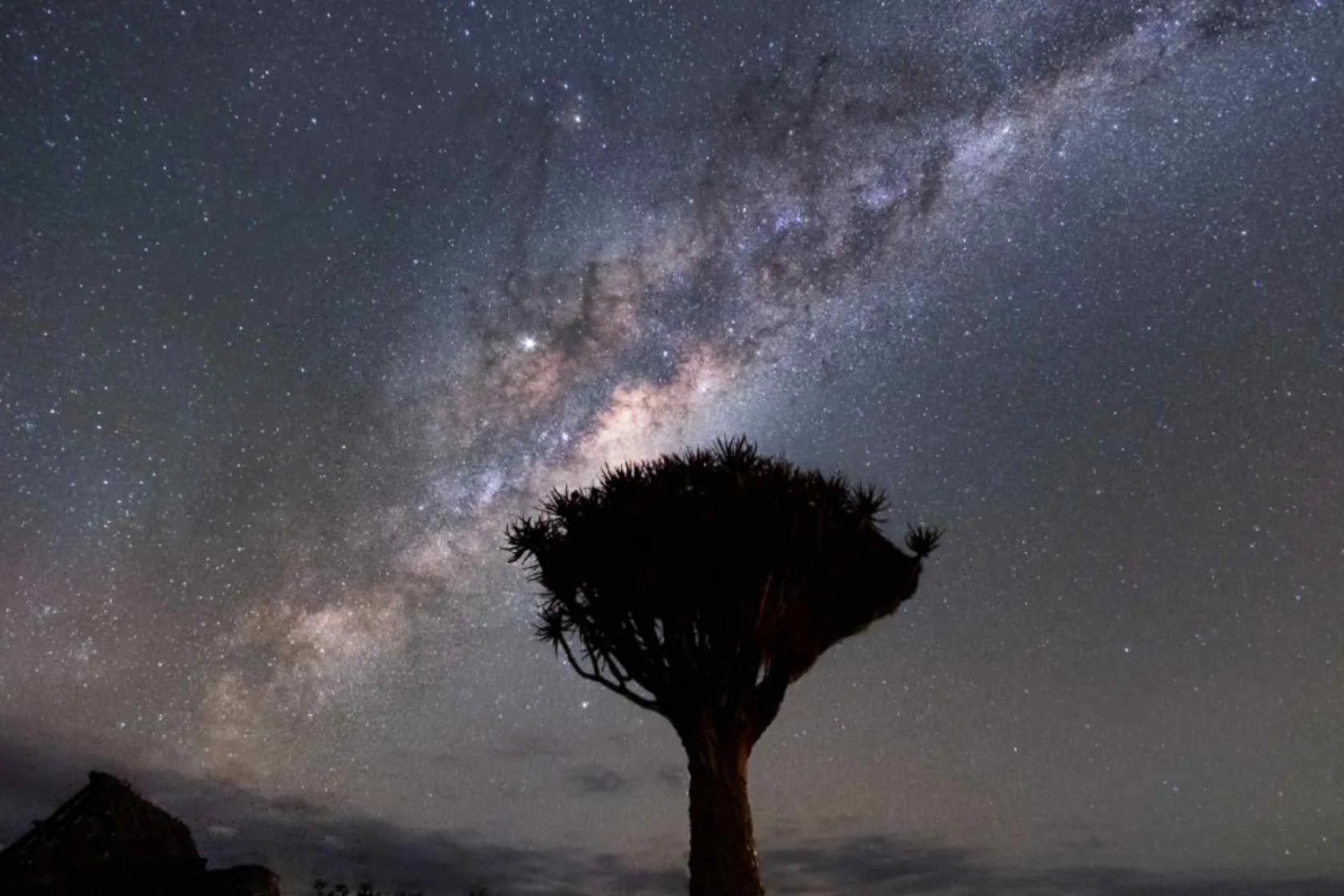
The Milky Way from Teide: A Celestial Experience
From Las Cañadas del Teide, it is possible to see the central region of the Milky Way, which appears as a dense and luminous band stretching across the night sky. During summer, the galactic core is particularly visible, offering views of star clusters, nebulae and other celestial structures.
To make the experience even more rewarding, you can join a stargazing tour, where specialised guides and powerful telescopes allow you to explore the cosmos in greater detail.
Frequently Asked Questions About the Milky Way
How Many Stars Are There in the Solar System?
The Solar System contains only one star: the Sun, which is fundamental to sustaining life on Earth. As the closest star to us, it provides the energy required for photosynthesis, influences our climate and governs the orbits of the planets, moons and other celestial bodies within the Solar System.
Although we can observe other stars in the night sky, they belong to the much larger Milky Way galaxy. The Sun’s proximity also allows scientists to study the processes that take place inside stars in extraordinary detail.
Can You See the Milky Way from Tenerife?
Yes. Tenerife, and particularly Las Cañadas del Teide within Teide National Park, offers excellent views of the Milky Way. The high altitude, low light pollution and frequent clear skies create especially favourable conditions for astronomical observation.
From the darker areas of the island, it is possible to see the luminous band of our galaxy and some of its regions with the highest concentrations of stars.
Why Is Tenerife Such a Good Place for Stargazing?
Tenerife’s reputation as a stargazing destination is largely due to its altitude, which makes it possible to observe the sky from areas situated above a significant portion of the lower atmospheric layers, reducing certain types of interference.
There are also specific measures in place to control light pollution and protect the quality of the night sky. Combined with the island’s climate, which provides numerous opportunities throughout the year to explore the heavens, these conditions make Tenerife a privileged destination for both amateur stargazers and professional astronomers.
The Infinite Wonder of the Milky Way
The hundreds of billions of stars in the Milky Way are an impressive reminder of the vastness of the universe. While scientists continue to refine their estimates, those who enjoy observing the sky can admire the beauty of our galaxy from extraordinary places such as Las Cañadas del Teide in Tenerife.
Whether you are wondering how many stars exist or simply want to admire the night sky, the Milky Way continues to inspire awe and curiosity in everyone who looks up at it.
Embark on a journey to discover the stars and experience the magic of Tenerife’s night sky — a true gateway to the cosmos.